
The Hidden Engineering Behind Modern Surgical Precision
We don’t usually think about surgery in mechanical terms—we think about surgeons, procedures, and patient outcomes. But as technology develops, robots are entering the picture.
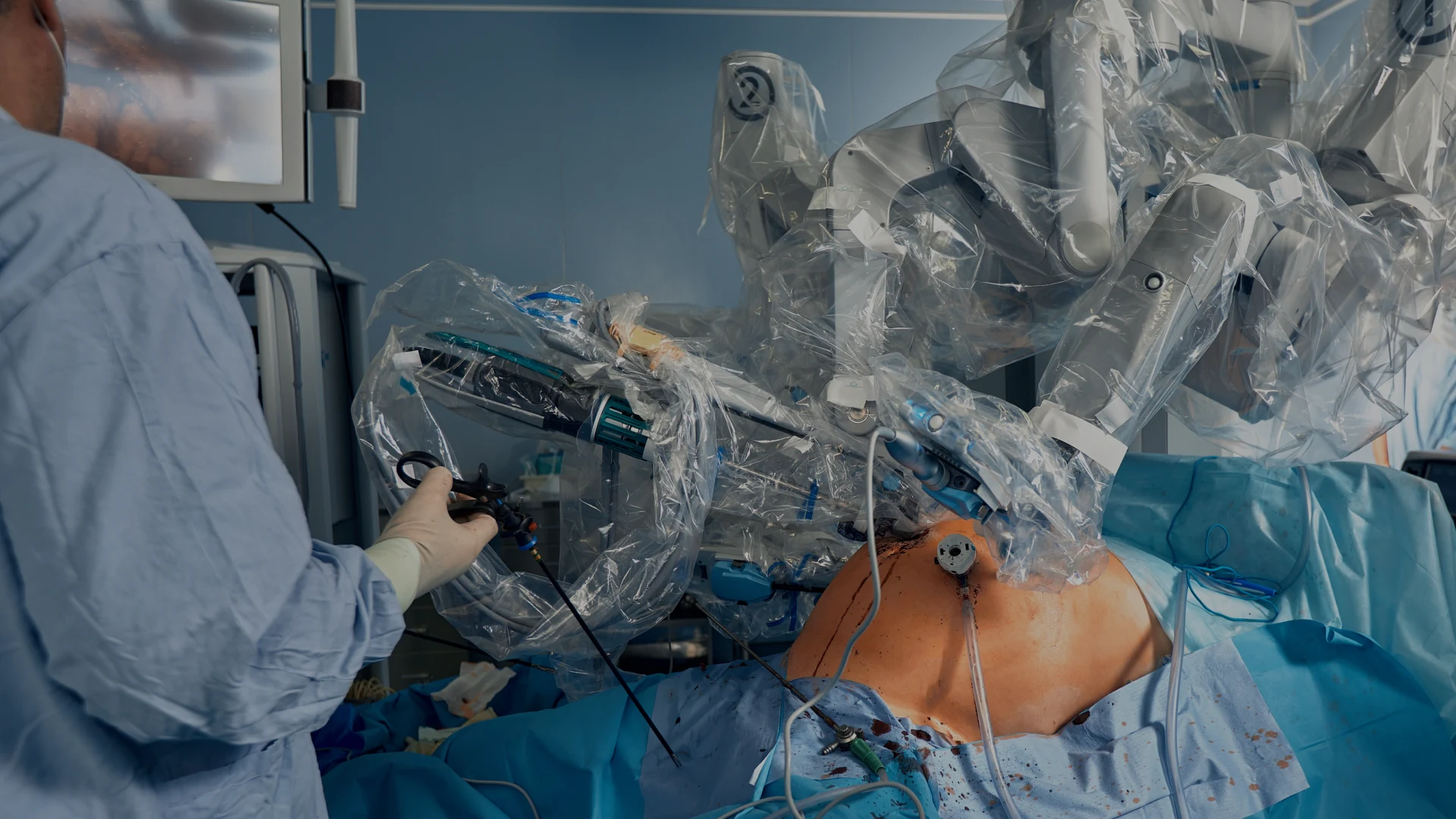
Robotic-assisted surgery has become one of the most advanced applications of modern engineering in healthcare. These systems allow surgeons to operate with enhanced precision, improved stability, and minimally invasive access that wasn’t possible a generation ago.
But behind the robotic arms, imaging systems, and control interfaces, there is something far less visible doing significant work.
Springs.
A Fair Question: Why Are Springs in a Surgical Robot?
It’s a reasonable question.
Surgical robots perform such great feats that we often forget that they rely on something as simple as a spring. Although they may be software-defined instruments, driven by motors and sensors, at the mechanical level, precision motion still has to obey physical rules. Motors generate force. Sensors track position. Software interprets input.
But between the outcome and the motion needed to complete it, there is always a physical system that must absorb energy, manage tension, return components to position, and ensure repeatability. That’s where precision spring systems shine. Constant Force Springs, Constant Torque Springs, compression elements, and custom flat springs all play roles in controlling how energy is stored and released inside surgical robotic assemblies. Not because they are traditional solutions, but because they are reliable ones.
The Reality of Precision in Surgical Robotics
Unlike most industrial systems, surgical robotics operates in an environment where tolerances are measured in fractions of a millimeter. There is no margin for drift. No allowance for inconsistency. No tolerance for unpredictable return behavior in a moving component.
Every action must be consistent and predictable. That requires components and springs designed to provide mechanical stability for the following conditions.:
- Consistent force output across repeated cycles
- Smooth, controlled motion without sudden release or backlash
- High-cycle durability under continuous use
- Compact geometry to fit within dense robotic assemblies
- Long-term stability under sterilization and medical environmental exposure
Where Springs Show up in Surgical Robotics
In many cases, the spring is not the primary driver of motion, but ensures the motion happens correctly. You won’t usually see them listed in marketing material, but inside surgical robotic platforms, spring systems appear in several critical areas:
- Force Control and Tension Management: Springs regulate and balance forces inside articulated joints and drive mechanisms, ensuring smooth motion during delicate procedures.
- Instrument Positioning Systems: Precision spring assemblies assist in returning surgical tools and robotic joints to defined positions with high repeatability.
- Haptic and Feedback Mechanisms: In systems that simulate or transmit force feedback to the operator, springs help mediate resistance and create a controlled tactile response.
- Return and Reset Functions: After movement cycles, compression and extension systems ensure components return to a known baseline position without mechanical drift.
- Miniaturized Mechanical Subsystems: As surgical robotic systems shrink and become more integrated, spring designs are often customized to fit within increasingly compact mechanical spaces.
The Vulcan Spring Difference
We work with medical device engineers and robotics manufacturers to design spring systems for applications where performance cannot vary.
From miniature constant force mechanisms to custom-engineered assemblies built for constrained robotic environments, our focus is on predictable mechanical behavior in critical systems.
Not because springs are the most visible part of surgical robotics.
But because they are part of what makes controlled precision possible in the first place.
And in medical technology, control is everything.