
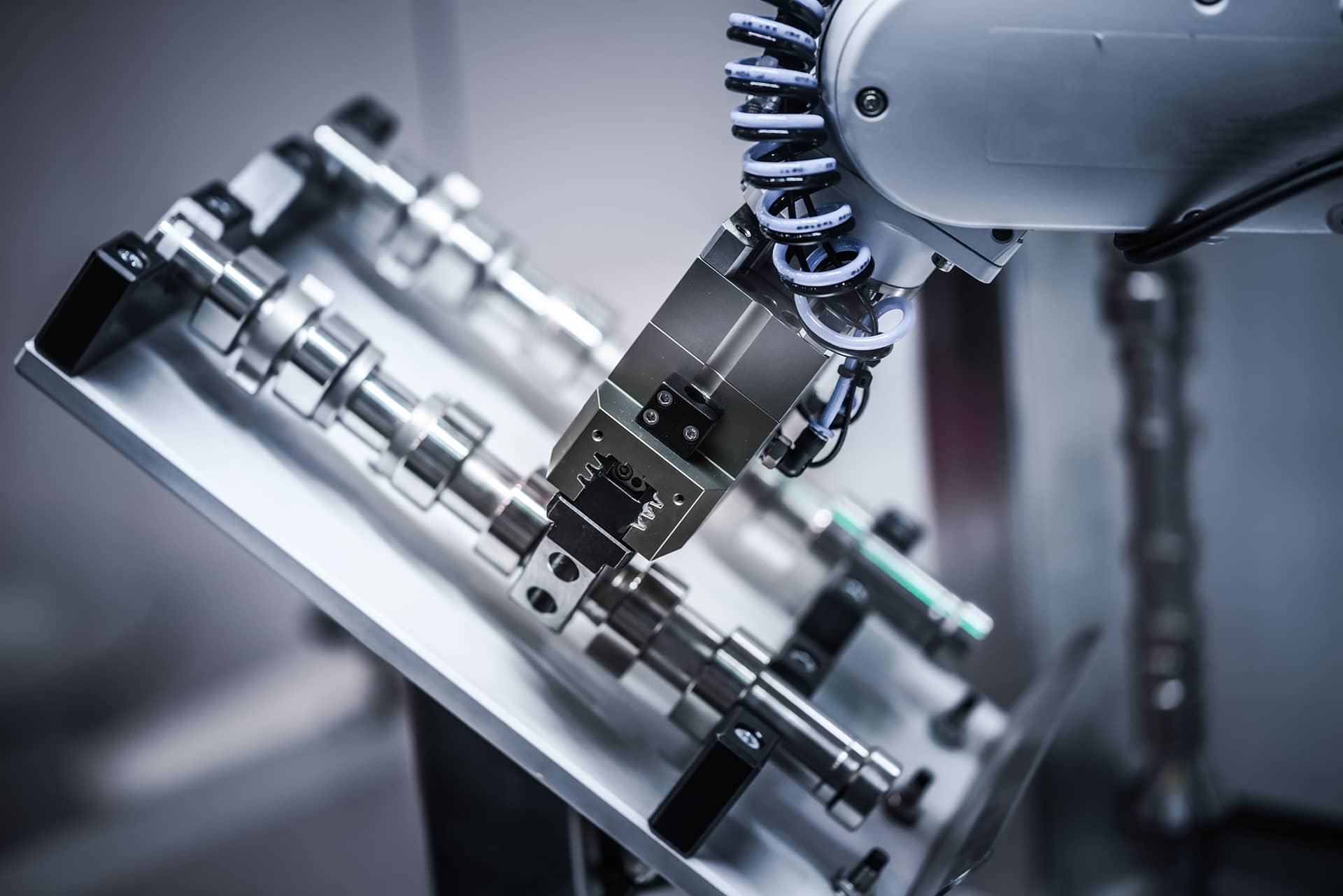
The role of precision spring engineering in modern robotics.
Conversations about robotics usually go straight to software, artificial intelligence, machine vision, sensors, and autonomous decision-making. Those aspects, while important, overshadow the physical aspect.
Most robotic systems, no matter how advanced its software, eventually has to perform a physical task. It has to move an arm, position a component, apply force, grip an object, or interact with its surroundings.
The moment a robot moves, mechanical engineering comes into play… Which brings us to springs.
They aren’t the most visible component in a robotic system; in many cases, they’re hidden deep within assemblies where nobody will ever see them, but they’re responsible for managing force, controlling motion, and helping ensure the robot behaves exactly the way it was designed to.
Why Would a Robot Need a Spring?
At first glance, it can seem a little counterintuitive. Modern robots are powered by motors, controlled by software, and monitored by an array of sensors. Compared to all that technology, a spring feels almost old-fashioned.
But springs solve a different problem.
Springs help manage the physical forces that exist between those things. They store and release energy. They maintain tension and motion control. They absorb shock. They counterbalance loads. They return components to known positions. Most importantly, they do all of that predictably. And predictability is one of the most valuable qualities any robotic system can have.
Precision Starts with Mechanical Design
Whether a robot is assembling electronics, handling materials in a warehouse, or positioning components in a manufacturing cell, every movement must be consistent and precise.
Small inconsistencies accumulate. Minor positioning errors become larger problems. Tiny variations in force can affect product quality, safety, and overall system performance.
Springs help engineers manage those variables with different components and spring types.
Throughout robotic systems, springs are used to:
- Control and regulate force
- Reduce unwanted vibration
- Support consistent positioning
- Improve energy efficiency
- Enhance safety and mechanical stability
In many applications, the robot’s performance depends as much on how forces are managed as on how commands are generated.
The software tells a robot where to go, and mechanical design helps ensure it gets there correctly.
Operational Cycle Expectations
Most consumer products don’t experience extreme repetition.
Robots do.
A spring inside a robotic assembly may undergo thousands of compression, extension, or rotational cycles during its service life. Each cycle subjects the material to stress, making fatigue resistance an important consideration in the design.
Over time, small issues become big ones. A slight loss of force or a minor change in performance characteristics can affect the accuracy and reliability of the entire system.
To delay these issues for as long as possible, material selection is critical. Some environments require corrosion resistance, whereas others prioritize fatigue life or environmental durability. Load requirements must be carefully evaluated so the spring delivers the correct force profile throughout its operating range.
Space constraints continue to shrink as robotic systems become more compact, often requiring custom spring and component designs that maximize performance within limited installation space. Every spring must integrate seamlessly with motors, actuators, sensors, and control systems to achieve the desired outcome.
The Rise of Collaborative Robotics
One of the fastest-growing areas of robotics is collaborative automation. Often called cobots, these systems are designed to work alongside people rather than behind safety barriers. That changes the engineering requirements significantly.
Traditional industrial robots are typically optimized for speed and productivity. Collaborative robots must balance those goals with safety, responsiveness, and controlled force.
Springs play an important role in achieving that balance. They contribute to force-limiting mechanisms that help reduce risk during human interaction. They absorb shock and vibration during unexpected contact. They assist with motion balancing and controlled movement. They support return and reset functions that improve reliability and operational safety.
As collaborative robotics expands into manufacturing, logistics, healthcare, and other industries, the demand for highly engineered spring solutions continues to grow.
Supporting the Future of Automation
The future of robotics is about building machines that can do more reliably.
The next generation of robotic systems will be smarter, faster, safer, and more adaptable than anything we’ve seen before. However, no matter how sophisticated the software becomes, every robotic system still relies on physical components to translate commands into motion.
Springs are one of the fundamental mechanical technologies that help transform advanced robotic concepts into systems that perform consistently in the real world.
And in robotics, consistency is what turns innovation into functionality.
The Vulcan Spring Difference
We work with engineers developing robotic technologies across a wide range of industries.
From custom flat springs and force-control mechanisms to highly specialized motion-management solutions, we help manufacturers solve complex engineering challenges with reliable mechanical performance.
Successful robotics doesn’t happen through software alone, it happens when every component works together exactly as intended. And when precision matters, every component matters.
Ready to discuss spring requirements for your robotic application? Contact the Vulcan Spring team today